Sunday, June 23, 2013

The "Quantified self" movement.

One of my favorites authors, Jacques Attali wrote a book ten years ago ("L'homme nomade" aka the Nomad) in which he predicted that people, in a near future, would try to monitor their body and their health, using wearable devices to track their heart rate, sleep etc.

This is no longer science fiction but reality.
This week, the famous New York investor Fred Wilson draw a lot of attention by explaining how happy he was about his new scale because he can measure his body mass fat on top of his weight(http://www.avc.com/a_vc/2013/06/withings-scale.html) and track all this on his smartphone!

Personally, I'm a big fan of these new gadgets.
Today you can track how much you sleep, walk, run thanks to numerous watches, wristbands and balances!
It's interesting to see how devices are converging from GPS watches/wristbands tracking your numbers of paces to balances synchronizing your latest data.
This is the concept behind this quantified self movement: having people aware of their numbers make them more careful about their diet, health and so on.

There are a couple of hardware suppliers that I know of and which I have personally tried.

Nike has done a great job with their Nike+Fuel Band and the Nike/TomTom watch but the interface can be sometimes confusing or too simple!
I had the TomTom Nike watch but it broke after 2 runs...(Amazon re-credited the money on my account very easily!).
I have tried the Nike+ Pod in the shoe, but it's obsolete now compared the Nike  Fuel Band, which is very expensive by the way.

Garmin is a well known player in the Handheld GPS space, and they have successfully made a breakthrough in the GPS watches space. I have used several Garmin watches and handheld GPS, they are reliable, solid and not too expensive. On the minus side, the Garmin Connect site (to upload data and see results) has improved but remains quite austere.
I hope Garmin will soon make a wristband.

My favorite these days is Fitbit. They started with pedometers, but they broadened their product's portfolio with the famous Flex wristband, which is out of stock for another 4 weeks!
The price ($99) and the Bluetooth synchronization with smartphone give them a huge competitive edge (Nike and Jawbone do synchronization via USB). Fitbit is one a the few players in this industry (if not the only one) who can propose a wristband, a very cool app on the smartphone and a scale!
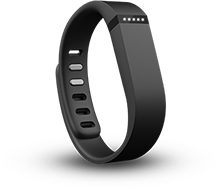
Fitbit Flex


One could expect a proliferation of such devices in the near future, encouraged by mobile operators, always eager to promote data usage (Jawbone has a distribution exclusivity with ATT retail stores) and consumers from the Y Generation eager to live a more healthy life.


http://quantifiedself.com/

Thursday, June 20, 2013

Android fragmentation

I have been hearing from months if not years now about Android being a fragmented ecosystem and issues that might represent for carriers, enterprise and eventually the 900 millions of end users
(there's even a website talking just about that topic: http://androidfragmentation.com/news#).
 
On my side, I've decided to do a little bit of investigation on that topic, below are a few elements.
 
First, anyone can easily find information about Android breakout of versions on...Google website. Google seems very open about this and share a lot of information (http://developer.android.com/about/dashboards/index.html)
 
There are 7 different versions of Android, none of these versions has more than 40% distribution, the three largest being:
  • Ginger Bread 2.3 with 36%
  • Ice Cream Sandwich 4.0 with 26%
  • Jelly Bean 4.1 and .2 with 33%
Until recently, you could see the release date of these different versions, but Google removed these dates, probably to avoid any questions related to the obsolescence of the software.
Indeed, Ginger Bread the oldest version has been released in 2010 and Jelly Bean, the latest arrived at Google IO 2012.


Android distribution versions as seen on their website

Now, anyone could say "OK, so Android is having the biggest market share but the versions are different, and so what?"
The problem is the application development and the hardware support.
As a end user, who am I calling if I have issues with my Samsung Galaxy software? Google? Samsung? ATT?
Even worse is when carriers are adding their apps to the device, this can lead to slowdown of the device or battery drains in some situations.
On the other hand, a Motorola Droid at Verizon for example is all but an open source product. Its software has been validated by the carrier and the ability to customize is very limited. Strangely enough, this kind of device is closer in its philosophy to Microsoft Windows Phone than to the original Android devices.

This Is What Android Fragmentation Looks Like
Tim Cook explaining how bad is Android fragmentation for developers!

To address some of the apps developer's concerns, Android seems to be working on a version 5 (Key Lime Pie) that would require less memory and system resources to run.
As a result an "old" user of an Android device could be eligible for a version upgrade...then comes the problem of who will make this upgrade available.
Because, instead of upgrading over the air millions of old devices, mobile operators, device makers and even Google would prefer to sell new ones!
 
Let's wait and see if Key Lime Pie will bring more value to Android, as all metrics point to the fact that economics for Android are less interesting than on iOS.

Some interesting to go further on that topic:
http://www.androidcentral.com/
http://www.androidcentral.com/android-versions
http://en.wikipedia.org/wiki/Android_(operating_system)